
My child is about to be kicked out of daycare.
Every year in the USA 17 000 preschool children are expelled- from daycare, and 50 000 are suspended- from daycare for dangerous or disruptive behaviors in the classroom. These behaviors include hitting, kicking, screaming, cursing, refusal to listen, temper tantrums, and “bullying” other children.
In most of the cases, adults assume the child’s behaviors were intentional and that the child’s intention was negative. As if they were “bad” seeds. By the time they come to see me in therapy, these children have been yelled at- and mistreated- by others and have a poor self-esteem.
Why is this happening?
First, there is often a high student to staff ratio, so that staff are unable to notice, intervene early, and help these children. This leads to staff burnout, and a classroom of stressed children; a volatile mix. Second, staff often do not have available trainings to help recognize- then help- children in need. Third: staff often do not have the resources to intervene. Finally, children are more frequently babysat with phones and gaming devices at home, so that when they arrive at daycare with (appropriately) no technology, they are more likely to be out of sorts.
What do we need to learn?
First we must change our mindset.
Young children WANT to behave, be accepted and loved. They don’t WANT to misbehave.
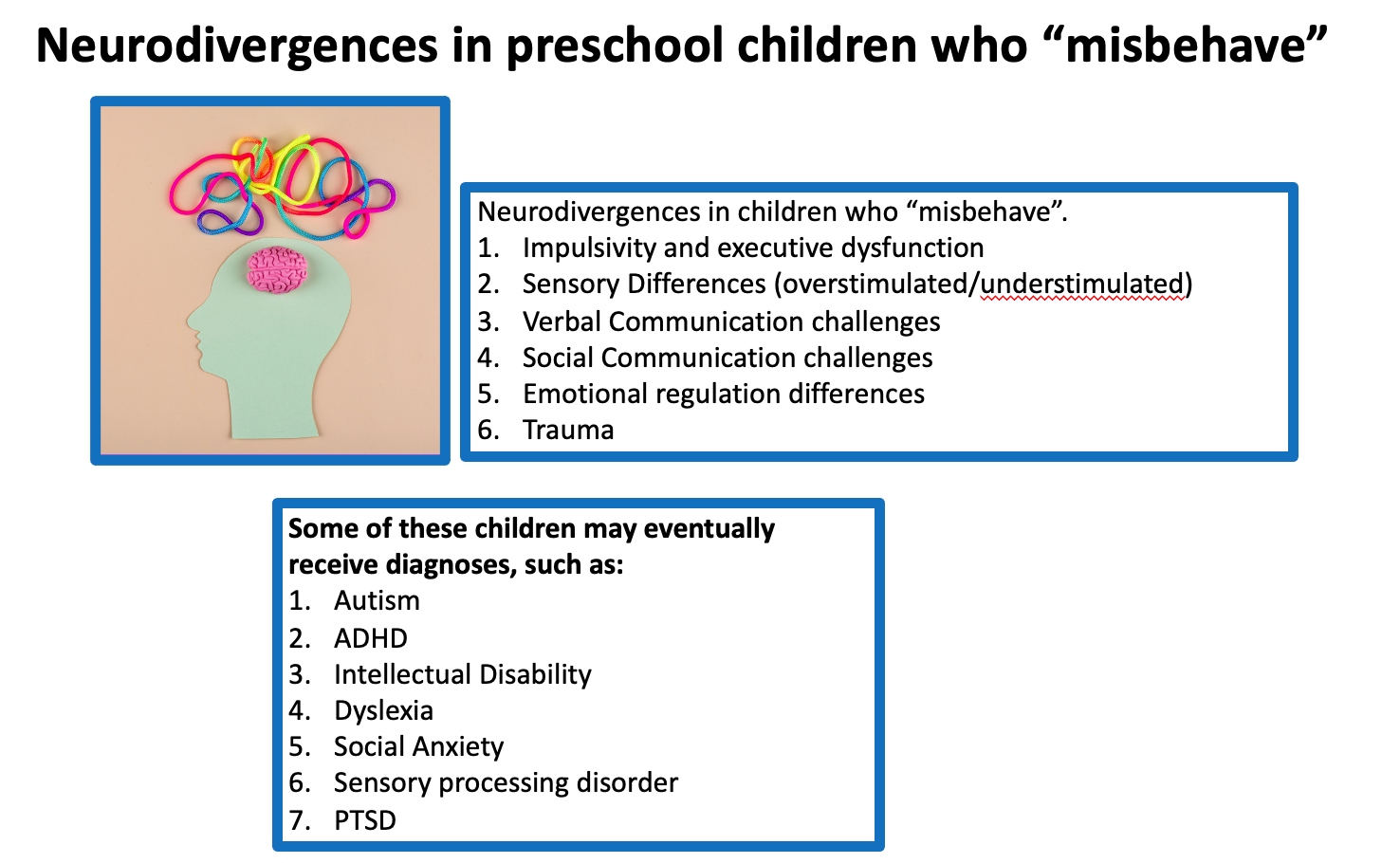
They are NOT intentionally doing “bad” things. Neurodivergence is often the culprit.
Here are some of the neurodivergences I see that are creating problem behaviors in children.
We need to understand them and help these children with skills they do not yet have.
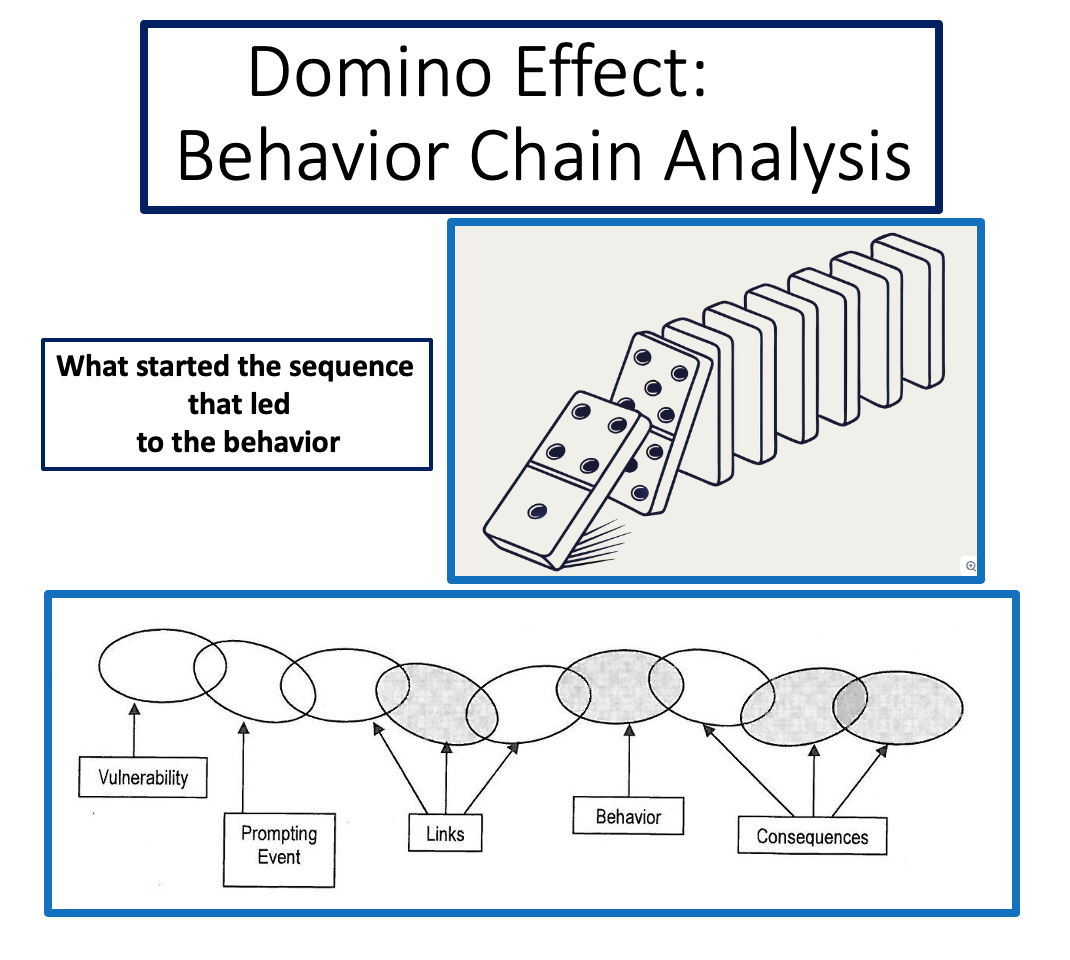
So how do we help them? We must watch them and notice when their body starts to show signs of distress. We have to notice what is the “domino” that sets them off. This is called behavior chain analysis. Then we have to help them better regulate right then!
How do I help?
In therapy I observe children who have “behaviors”. I help the parents notice their behavior patterns, how their body changes, and when to help them. How to help them.
I Teach children and parents emotion regulation skills that are non shaming.
I also help parents create a “cuddle spot” for children to go to, where there are coping skills for them to learn to regulate : such as stuffies, fidgets, drawing materials, books, playdoh, puzzles: designed for that one child, that allows them to calm.
Give me a call if you have a child who could benefit from extra skills. I can help.